
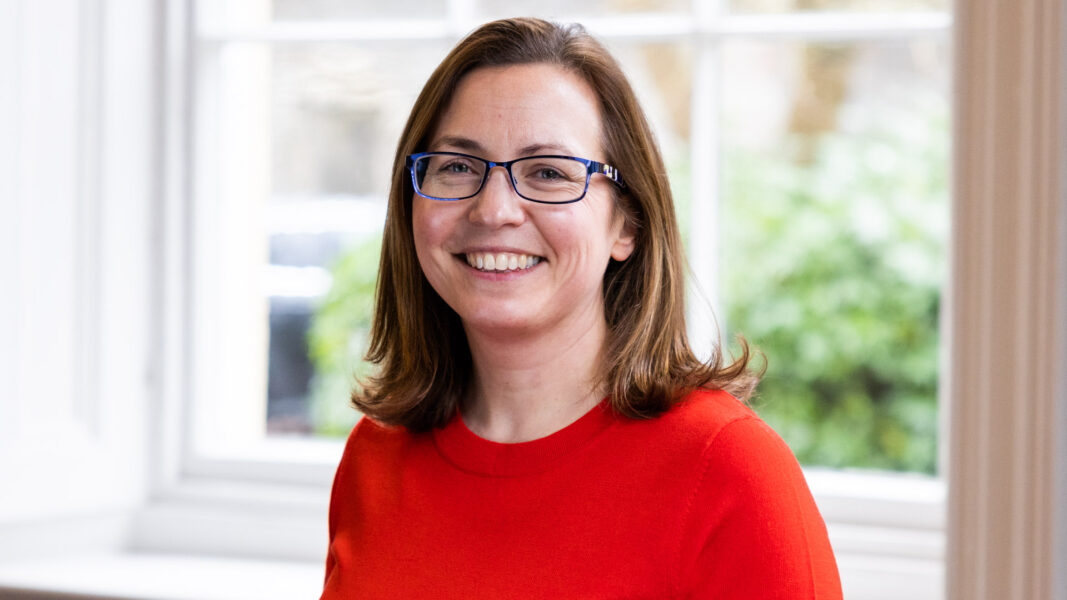
Rachel Bell has played an important part in helping LandAid build its presence across the South West and beyond. From supporting the creation of one of our first Regional Boards to joining the Patrons Network and contributing to our Gala Dinner Committee, she has helped bring people, ideas and opportunities together. Here, she reflects on how her involvement began, and how she continues to champion LandAid’s mission today.
How has being part of the South West Board helped LandAid create greater impact across the UK? What does it mean for professionals in the regions to be involved?
“When the South West Board was forming, LandAid was still seen by many as a London-based property charity. So helping to establish that first step into the region felt really exciting.
Gavin Bridge approached me because I had a strong network through Women in Property – I’d been the South West Chair in 2017–18 – and he wanted people who could champion LandAid’s work locally. We could draw on lessons from another region that set up just before us, but in many ways we were helping to put those early ground rules in place.
What made it special was showing that the region stretched far beyond Bristol. We were thinking about Exeter, Truro, the whole South West.
The shift towards pro bono work was also really important. As an industry, we started recognising that applying our professional skills often enables an enhanced level of impact compared with one-off volunteer activities, like painting a fence or planting trees. Being involved at that early stage gave us a way to connect businesses into something meaningful, and to introduce LandAid in a way that felt relevant to them.
And then the South West Gala Dinner – that was a real highlight. In that first year we held it in a derelict fire station with long trestle tables and street food. It challenged the traditional black-tie stereotype and helped get LandAid’s brand out there in an entirely new way. It helped people see that the charity wasn’t just London-focused – it was here, in the South West, too.”
What motivates you to support LandAid as a member of the Patrons Network?
“My regional role has evolved over the years into a national role, and I always throw myself into these things 120%.
When the Chair role moved from Gavin to Jay Ridings, it felt like the right moment to step back and let others bring new ideas.
But I still felt I had something to give. When Alice Lamb and Rob Bould got in touch out of the blue to talk about the Patrons Network, I honestly thought, ‘Really? Why me?’ The imposter syndrome hit – feeling like I wasn’t at the right level, or that I wasn’t good enough.
But Alice was a brilliant cheerleader. She helped me see that I could continue supporting LandAid’s messaging and be part of something meaningful. It gave me the chance to stay connected and to keep contributing even without being on a regional board. This was also helped by my continued role within Women in Property at the Limited board level and opportunities to support both organisations.”
Why does the Patrons Network appeal to you as a way to support LandAid?
“For me, the Patrons Network is about advocacy. It’s not just about being in a senior role – and I hope we’re seeing more people coming into the network who aren’t just CEOs. It’s about having connections across the industry and keeping LandAid front-of-mind.
Patrons can join conversations up, raise the profile of what LandAid is doing, and signpost businesses or charities to opportunities they might not otherwise know about.
And personally, my job is all about relationships and partnerships. Being in the network sometimes gives you access to people you might ordinarily spend years trying to meet. You find yourself sitting at the Gala Dinner next to a potential client or agent. ‘Okay, this is really useful.’
It helps us as a business too – and that benefits LandAid, because it keeps those connections across the wider industry ecosystem alive.”
You’re part of the LandAid Gala Dinner Committee. How did you get involved, and what support has the committee been able to give?
“It came from another conversation with Alice – the Events Team wanted someone from the Patrons Network represented on the committee. I did have that moment of wondering whether I was taking on too much, but the commitment is actually very light-touch: short calls, reaching out to a few businesses, using our networks where we can.
The committee works because everyone brings something different. It’s a really strong group of people looking at the event from different angles.
We’ve been able to approach businesses, encourage the right contacts, help with securing prizes, and generally support the LandAid team leading up to the event.
I’d attended the dinner the year before, so I knew what it was aiming for. But this year was next level. Hearing that next year’s venue will be the Natural History Museum was an amazing moment. I felt really proud to have played even a small part in that success.”
What advice would you give other Patrons about using their connections to make impactful contributions?
“There are simple things that make a real difference – sharing LandAid’s events, signposting people, just getting things in front of the right eyes.
But there’s so much more to LandAid than the events. The updates from Paul at things like the Patrons event are so helpful for understanding the bigger picture: the strategy, the partnerships, the breadth of support LandAid offers. When you understand all of that, you can have the right conversations at the right moments.
So my advice is: be an advocate. Cheerlead. Ask people if they’ve been involved or if they knew about certain opportunities. And absolutely attend the yearly Patrons event; it’s such a lovely moment of celebration and connection within the network.”
Looking ahead, what do you hope to get out of the Patrons Network, and what potential does it have to create even greater social impact?
“I think there’s still a lot of potential in the network – especially in how it can keep joining things up regionally. Not everything works at a national level, but there are loads of regional connections that can be strengthened.
For example, through Women in Property, we’re sending information about the SleepOut to all 1,600 members. Those kinds of ecosystem links are where I think the network can keep growing.
For me personally, it’s about staying connected, joining up conversations, and continuing to advocate for LandAid whenever it feels appropriate and right.
If we keep doing that – the small things as well as the bigger ones – the collective impact can be huge.”